
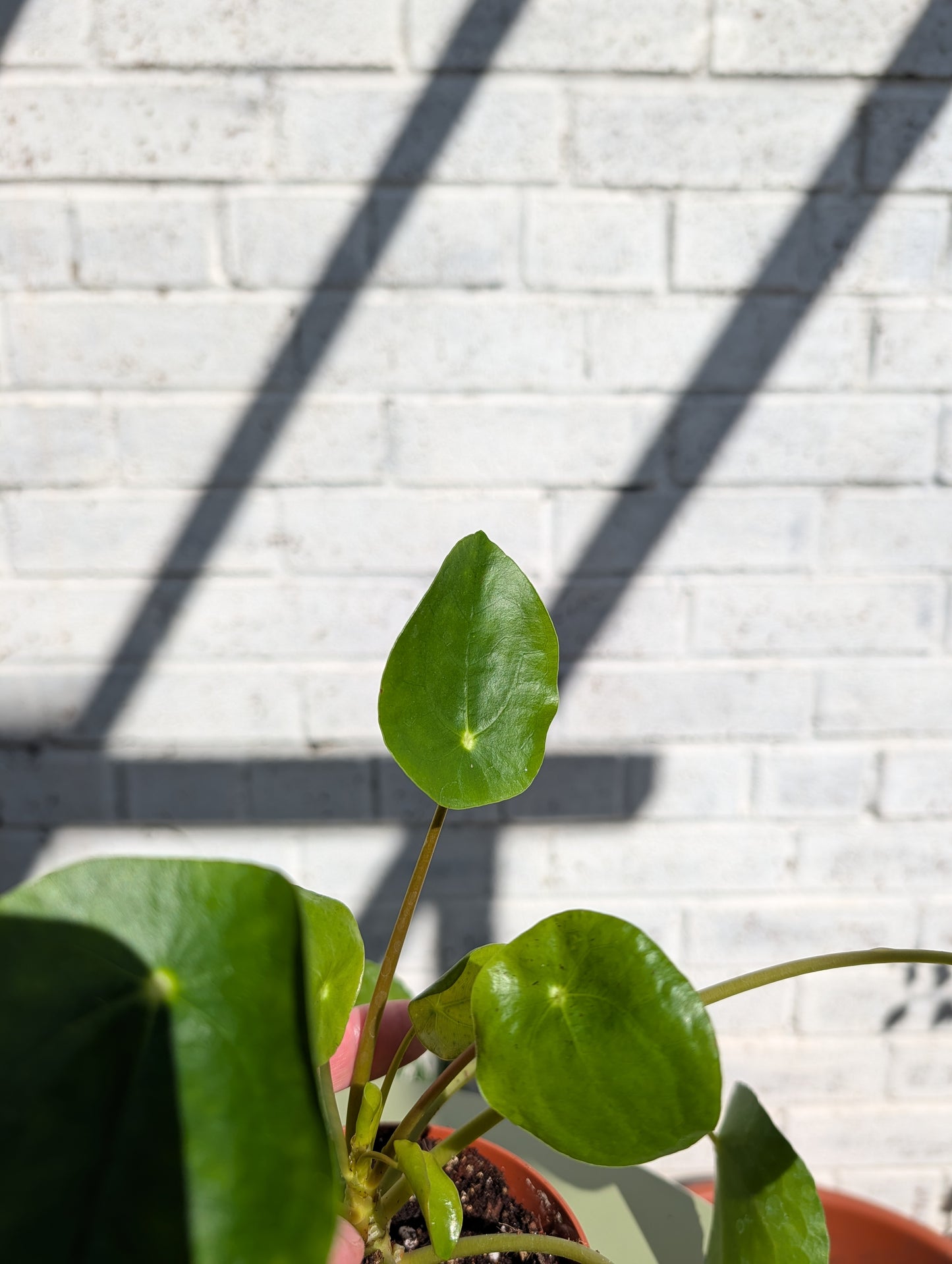
Chinese Money Plant
Chinese Money Plant
Pilea peperomioides | The Pancake Plant
Couldn't load pickup availability
The ultimate pass-it-on plant with leaves that look like little green pancakes floating on stems.
The Pilea peperomioides, mostly known as the Chinese Money Plant, is a massive favourite for a very good reason. It looks brilliant, bringing a weird and wonderful architectural vibe to any shelf. But the best thing about this little guy is that it loves to reproduce. A happy Pilea will constantly sprout tiny baby plants (or "pups") from the soil around its base, which you can easily snip off to grow new plants for your friends. Or you can just hoard them all and build a Pilea empire in your flat.
How to keep it happy:
-
Light: Bright, indirect light is perfect. Direct sun will scorch those perfect round leaves. This plant also aggressively reaches for the sun, so you will need to rotate the pot a quarter turn every week if you want it to grow straight up instead of leaning heavily to one side.
-
Water: Let the top half of the soil dry out completely before you water it again. It has slightly succulent-like leaves that hold moisture, so it prefers to be slightly underwatered rather than sitting in a soggy pot.
-
Feed: A standard dose of liquid fertiliser once a month during spring and summer will keep it popping out those little baby plants.
Troubleshooting:
-
Leaves curling or doming? If the leaves are curling inwards like a cup, it is usually trying to protect itself from too much direct sun or heat. If they are doming outwards, it might be begging for a bit more light.
-
Losing lower leaves? Do not panic if the odd leaf at the very bottom goes yellow and drops off. That is just the natural ageing process as the main stem grows taller. If lots of them are going yellow and mushy at once, you are overwatering it.
Pet Safety: 100% Pet Safe. You can completely relax! The Chinese Money Plant is non-toxic, so your cats and dogs are perfectly safe around it.
Share

Care Guides
View all-
A Guide to Calathea Tropicstar Care: The Fuzzy-...
Let's be real. If you do not say "oooh!" when you touch the leaves on this one, we cannot be friends. The Calathea Tropicstar (which is technically a Ctenanthe, but...
A Guide to Calathea Tropicstar Care: The Fuzzy-...
Let's be real. If you do not say "oooh!" when you touch the leaves on this one, we cannot be friends. The Calathea Tropicstar (which is technically a Ctenanthe, but...
-
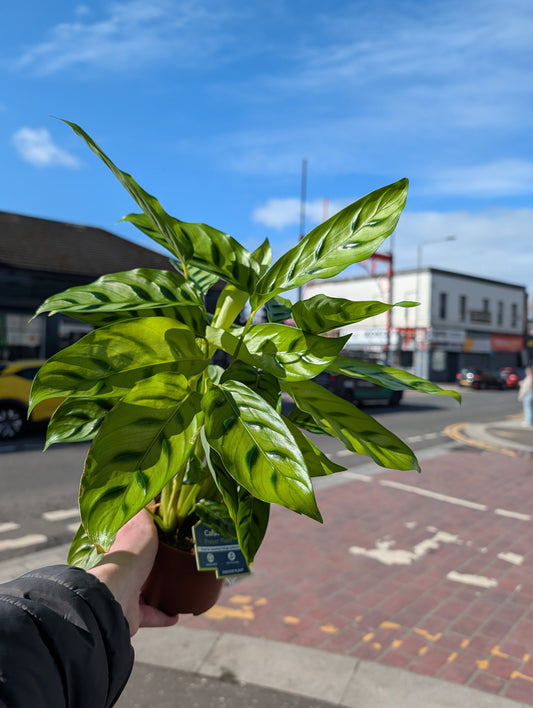
Calathea Leopardina Care: The Animal Print Icon...
Let's be real. If you love a fierce animal print but draw the line at leopard-print wallpaper in your flat, the Calathea Leopardina is exactly what your space needs. This...
Calathea Leopardina Care: The Animal Print Icon...
Let's be real. If you love a fierce animal print but draw the line at leopard-print wallpaper in your flat, the Calathea Leopardina is exactly what your space needs. This...
-
Neem Oil: The Plant Parent’s Best Friend (And H...
If you have houseplants, you will eventually meet their uninvited guests: pests. Whether it's spider mites, fungus gnats, or mealybugs, Neem Oil is one of the best natural weapons in...
Neem Oil: The Plant Parent’s Best Friend (And H...
If you have houseplants, you will eventually meet their uninvited guests: pests. Whether it's spider mites, fungus gnats, or mealybugs, Neem Oil is one of the best natural weapons in...