
Croton Sunny Star
Croton Sunny Star
Codiaeum Variegatum
Couldn't load pickup availability
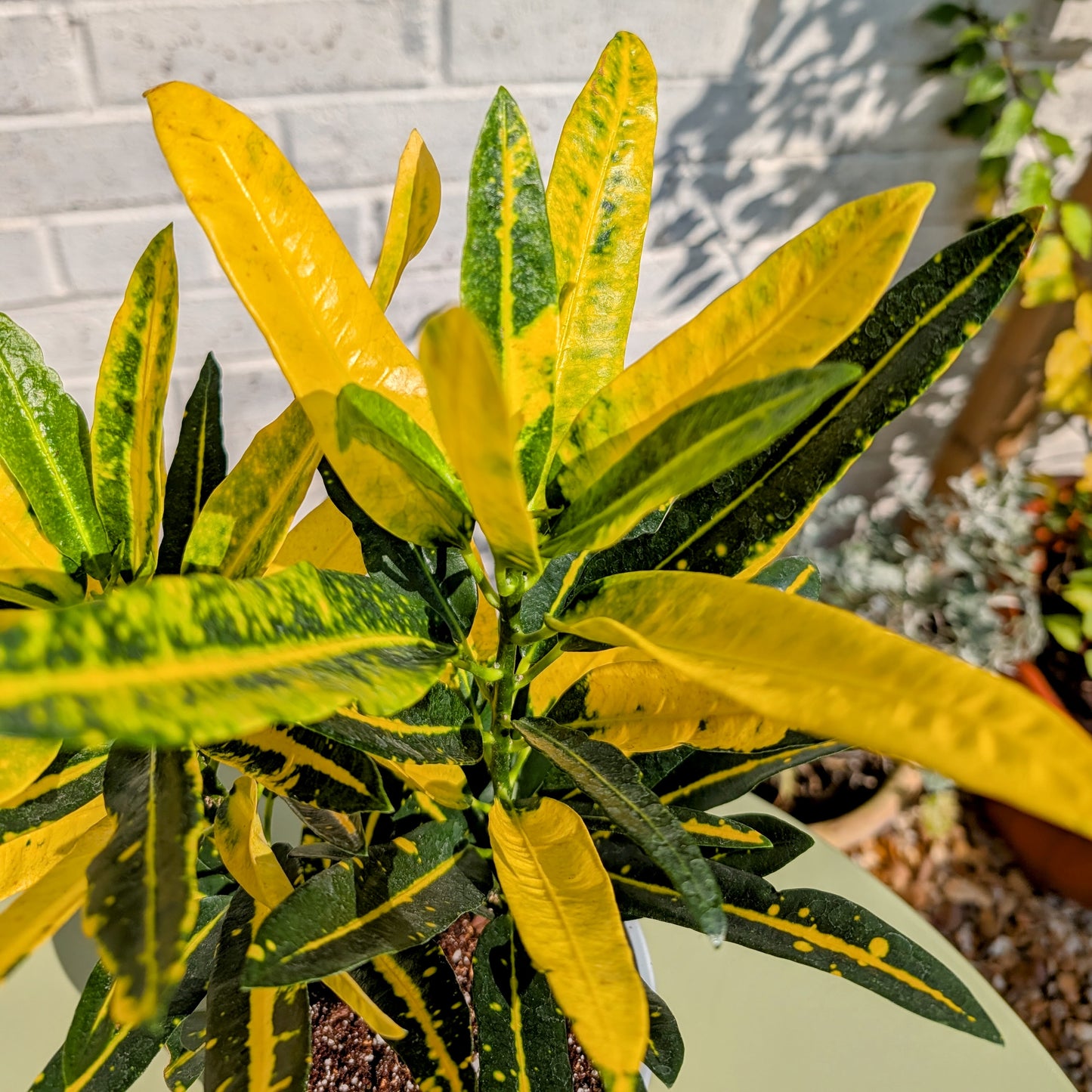
The Sunny Star Croton is essentially a tropical sunset in a pot. It is famous for its vibrant, elongated green leaves that look like they have been heavily dusted with bright yellow and gold paint. If you want a plant that brings a serious, unapologetic pop of colour to your flat, this is the one.
Crotons do have a bit of a diva reputation because they absolutely hate moving day. They might throw a minor tantrum and drop a leaf or two when you first bring them home, but do not panic! Because this tropical beauty is quite sensitive to temperature shifts, it must be grown entirely indoors where the climate is steady. Once you find the perfect, bright spot for it, it will settle in and become a fantastically rewarding and colourful housemate.
How to keep it happy:
-
Light: This plant is a total sun worshipper. It needs maximum bright light to keep those yellow stars popping. It can even handle a few hours of direct sunlight. If you hide it in a dark, dingy corner, the new leaves will revert to a plain, boring green.
-
Water: The golden rule here is consistency. Keep the soil slightly, evenly moist during the growing season. Do not let it dry out completely to dust, but absolutely do not let it sit in a puddle of water.
-
Humidity: It loves a humid environment. Keep it well away from hot radiators or cold draughty windows, and give it a regular misting to keep the foliage happy.
-
Feed: A weak dose of standard liquid houseplant fertiliser once a month during the spring and summer will fuel all that bright new growth.
Troubleshooting:
-
Dropping leaves suddenly? Crotons despise sudden changes in temperature, draughts, or being moved from room to room. Find a bright spot away from doors and radiators, and simply leave it alone to adjust. It can also drop leaves if you let the soil dry out entirely.
-
Losing its yellow spots? The plant is begging for more sunlight. Nudge it much closer to a bright window to get that vibrant colour back.
Pet Safety: Not Pet Safe. Like all Crotons, the sap is toxic to animals if ingested and can cause skin irritation. Keep this bright beauty up high and well out of reach of curious cats and dogs.
Share

Care Guides
View all-
A Guide to Calathea Tropicstar Care: The Fuzzy-...
Let's be real. If you do not say "oooh!" when you touch the leaves on this one, we cannot be friends. The Calathea Tropicstar (which is technically a Ctenanthe, but...
A Guide to Calathea Tropicstar Care: The Fuzzy-...
Let's be real. If you do not say "oooh!" when you touch the leaves on this one, we cannot be friends. The Calathea Tropicstar (which is technically a Ctenanthe, but...
-
Calathea Leopardina Care: The Animal Print Icon...
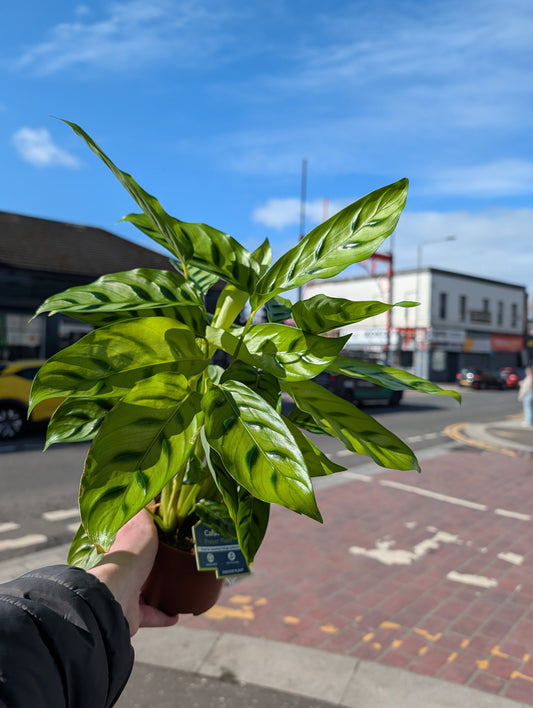
Let's be real. If you love a fierce animal print but draw the line at leopard-print wallpaper in your flat, the Calathea Leopardina is exactly what your space needs. This...
Calathea Leopardina Care: The Animal Print Icon...
Let's be real. If you love a fierce animal print but draw the line at leopard-print wallpaper in your flat, the Calathea Leopardina is exactly what your space needs. This...
-
Neem Oil: The Plant Parent’s Best Friend (And H...
If you have houseplants, you will eventually meet their uninvited guests: pests. Whether it's spider mites, fungus gnats, or mealybugs, Neem Oil is one of the best natural weapons in...
Neem Oil: The Plant Parent’s Best Friend (And H...
If you have houseplants, you will eventually meet their uninvited guests: pests. Whether it's spider mites, fungus gnats, or mealybugs, Neem Oil is one of the best natural weapons in...